
How the U.S. States Got Their Names
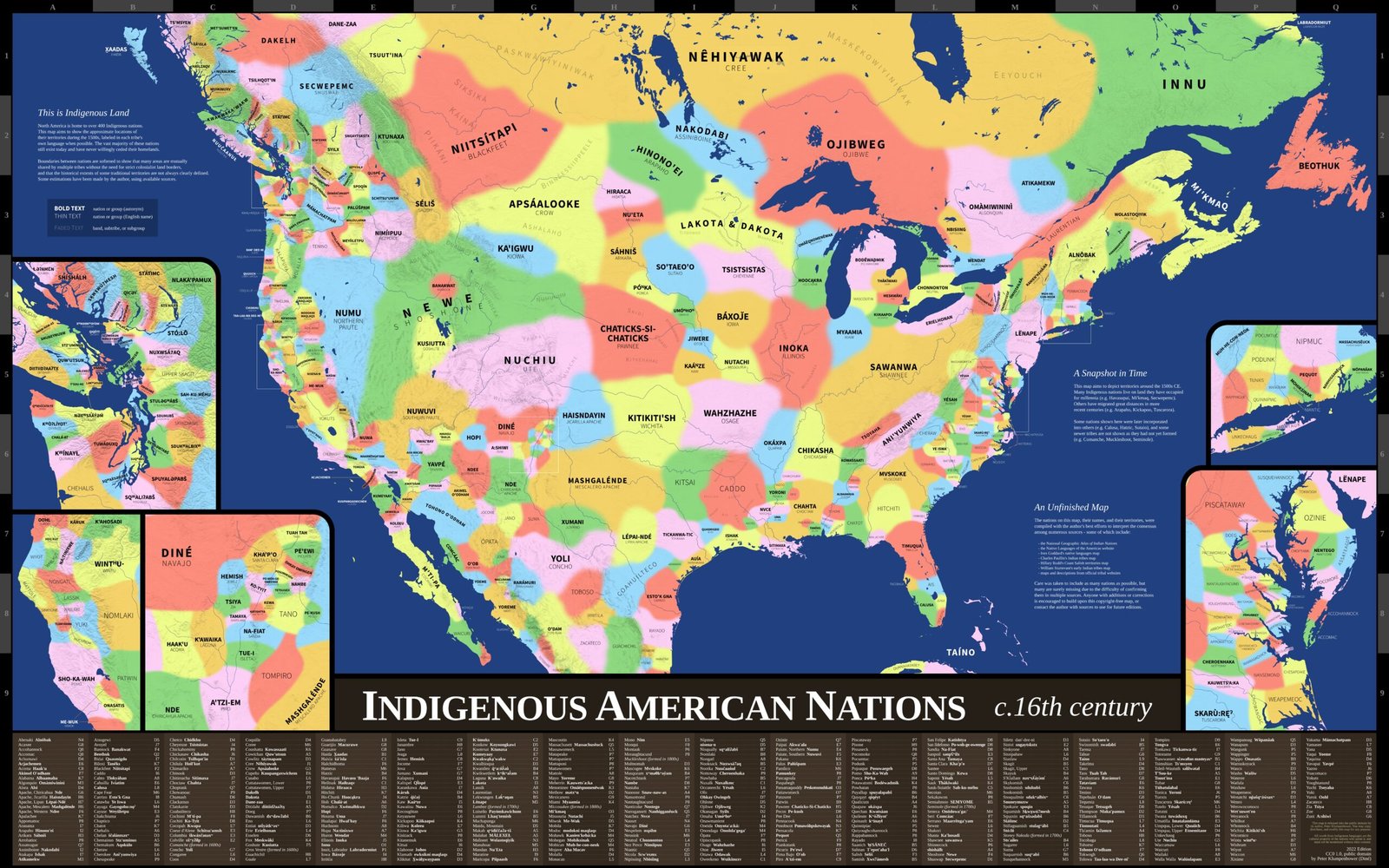
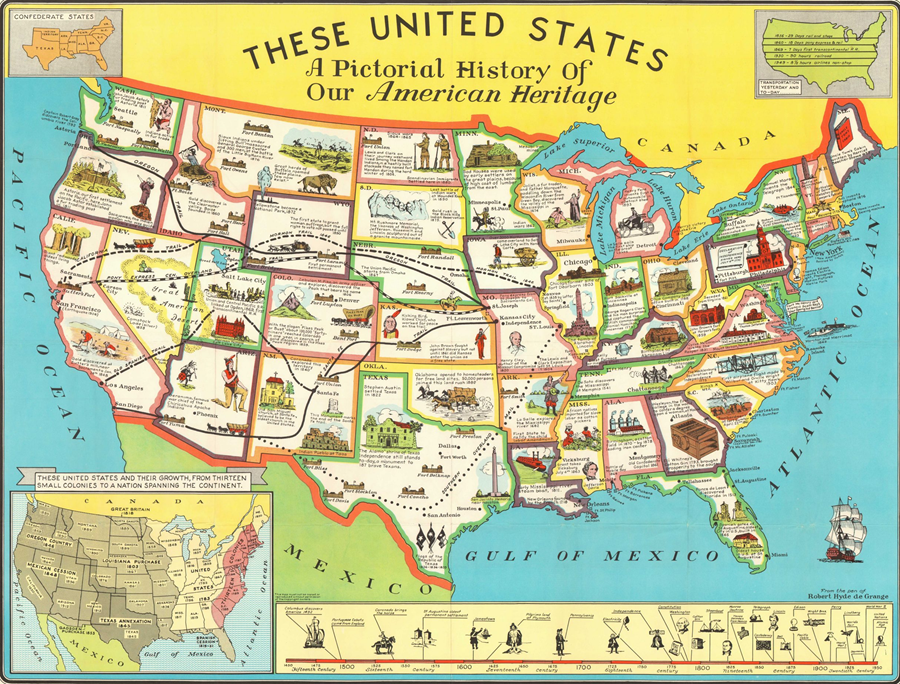
Following are the 50 States’ names with brief explanations of their origins. Please note, this list may have some inaccuracies, because as I researched the state names, I often found multiple explanations at various sources, many of which contradicted each other. So I had to try to choose the options which seemed to be confirmed by the most legitimate authorities.
I used the word “Indian” rather than “Native American” in the cases where I was quoting or paraphrasing historical sources.
- ALABAMA: Named after a Muskogean-speaking Creek Confederacy tribe called the Alabamas, Alibamons or Alibamus. The word is roughly translated as ‘clearers of the thicket’ or ‘herb gatherers’.
- ALASKA: From the Aleut word “alaxsxaq” or “alakshak”. Apparently, the word can mean “peninsula”, “mainland” or “great land.”
- ARIZONA: This one is in dispute. Some say it comes from the word “Arizonac”, or “alĭ ṣonak”, by the Tohono O’odham tribe of the Southwest, meaning “site of the small springs”. Other say it comes from the Aztec word “arizuma”, which means “silver-bearing”.
- ARKANSAS: Origin uncertain. According to some, the name is derived from an Algonquin word, variously spelled Alkansia, Alkansas or Akamsea. Other historians say that the word Arkansas is the French version of the Sioux word Kansas, meaning “south wind people”.
- CALIFORNIA: Most historians agree that Cortez borrowed the word from the romance novel Las Sergas de Esplandián (The Deeds of Esplandián), written by Montalvo in 1510. This book describes a fictional island named California, a utopian paradise ruled by Queen Calafia.
- COLORADO: Origin is disputed. Some believe it came from the Spanish word meaning “rad” or “ruddy,” describing the color of the red earth found in some areas.
- CONNECTICUT: Appears to be named after the Mohican word “Quonoktacut”, or “Quonecktacut” meaning “long river”, or “place of long tidal river”.
- DELAWARE: Named for Lord De La Warr, first governor and captain-general of Virginia.
- FLORIDA: Ponce de Leon landed on this peninsula during the liturgical period from Easter Sunday to Pentecost in 1513. It’s during this period in Spain when spring flowers burst into bloom. When de Leon saw the lush flowery vegetation in the new land, he called it “La Pascua Flores”, translated as “The Paschal Season of Flowers”. The word Flores became “Florida”.
- GEORGIA: King George II of England named the colony after himself in 1732.
- HAWAII: Derived from the native word “Owhyhee”, meaning “homeland”.
- IDAHO: Origin uncertain. It may come from the Shoshone phrase “Edah hoe”, meaning “light on the mountains”, or “gem of the mountains”.
- ILLINOIS: Named by the French after the Illini Indians.
- INDIANA: Many claim it was named for the Indian tribes who settled in western Pennsylvania.
- IOWA: Named after the Ioway tribe, whose name means “gray snow”.
- KANSAS: Named for the Kansas or Kanza tribe of the Sioux. The name translates as “south wind people,” or “wind people.”
- KENTUCKY: Origin uncertain. Pioneer George Rogers Clark claimed the name was derived from the Indian word “Kentake,” meaning “meadow land.” Others say it comes from the Shawnee word meaning “at the head of a river”. Still others say it stems from the Wyandot word “Ken-tah-ten,” meaning “land of tomorrow.”
- LOUISIANA: Named after Louis XIV of France.
- MAINE: Some say that it was named after the private estate of Henrietta Maria in Maine, a French province. Others attribute it to fishermen of the islands along the coast who referred to it as the main or mainland, often spelled “Maynland” in some early documents. In a grant to Sir Fernando Gorges by Charles I in 1639, it is referred to as “the province or county of Mayne.”
- MARYLAND: Named for Queen Henrietta Maria, wife of Charles I of England.
- MASSACHUSETTS: From the Algonquin word “Massadchu-es-et,” meaning “great-hill-small-place,” possibly referring to the hills around Boston.
- MICHIGAN: From Algonquin word “Mishigamaw,” meaning “big lake” or “great water,” or the Chippewa word “Michigama”, meaning “large lake”. (The Algonquins and Chippewas are closely related, both with Algonquian language roots).
- MINNESOTA: Derived from the Dakota Sioux word “Minisota”, meaning “white water”, “cloudy water” or “sky-tinted water”.
- MISSISSIPPI: Comes from the Ojibwe word Misi-ziibi, which means “great river”. The French spelled as “Michi Sepe”, which was later Anglicized to become the name of the Mississippi River and the state of Mississippi.
- MISSOURI: Named after the Missouria, a tribe related to the Sioux.
- MONTANA: From a Spanish or Latin word meaning “mountainous.”
- NEBRASKA: Originates from an Otoe-Missouria or Omaha-Ponca term, Ñí Brásge or Ní Btháska, meaning “flat water”, referring to the Platte River.
- NEVADA: From the Spanish word meaning “snow-clad,” “snowy land,” or “snowy”, referring to the snow-clad mountains found there.
- NEW HAMPSHIRE: Named in 1629 by John Mason for the English county of Hampshire.
- NEW JERSEY: Named for the Isle of Jersey off the coast of England by George Carteret, who settled in this area after receiving it in a grant from the Duke of York.
- NEW MEXICO: Called “New Mexico” when the Mexicans referred to the territory north and west of the Rio Grande in the 16th century. May have been derived from the name of the Aztec war god, “Mexitli”.
- NEW YORK: Originally called New Netherlands, but changed in 1664 when taken over by the English and named in honor of the Duke of York.
- NORTH CAROLINA: Reputed to be named for Charles II of England, by those who had received a grant to the land in that colony.
- NORTH DAKOTA: From Indian name Lakota, Nakota, Lahkota, or Dakota, depending on dialect. It means “Allies”, the common name of the confederated Sioux tribes.
- OHIO: Originates from the Seneca (Iroquoian) word ohiːyo’, which translates to “good river,” “great river,” or “large creek”.
- OKLAHOMA: Choctaw word meaning “red people”.
- OREGON: Origin uncertain. It has variously been attributed to the Shoshoni phrase “Ogwa Pe-on”, meaning “River of the West”, or from the Chinook word “oolighan”, a type of fish.
- PENNSYLVANIA: This is the only State in the Union named for its founder, William Penn. He added “Sylvania” to his name because of the extensive forest areas.
- RHODE ISLAND: Originally called “Roode Eylandt” (Red Island), by the Dutch Navigator Adrian Block, presumably from the red clay along the shore. The name was later anglicized to Rhode Island.
- SOUTH CAROLINA: Named for Charles II of England, the same as its sister State, North Carolina. (See North Carolina.)
- SOUTH DAKOTA: From Sioux word meaning “allies.” (See North Dakota.)
- TENNESSEE: Named for a Cherokee village called Tanasi, or Tanase, located on what is now the Little Tennessee River.
- TEXAS: Most historians agree that the name is a Caddo Indian word “táysha” meaning “friends” or “allies. The Spanish changed it to “tejas”, which later became “Texas”.
- UTAH: Name taken from the Ute Indians who inhabited that region.
- VERMONT: Named “Vert Mont” by the French explorer Samuel de Champlain for the Green Mountain range found in that state.
- VIRGINIA: Named by Sir Walter Raleigh for Elizabeth, the Virgin Queen of England.
- WASHINGTON: Originally called the “Territory of Columbia”. A bill introduced in the 32nd Congress changed the name to Washington in honor of George Washington.
- WEST VIRGINIA: When the western counties left Virginia, they just added the word “West” to the original name.
- WISCONSIN: Originates from an Algonquian term for the Wisconsin River, initially recorded by the French explorer Jacques Marquette in 1673 as “Meskousing”. French writers changed the spelling to Ouisconsin, which was later Anglicized to Wisconsin.
- WYOMING: Derived from the Lenape Delaware word “xwé:wamənk” or “mecheweami-ing”, which means “at the big river flat”.