
Safeguard American Voter Eligibility Act (the SAVE Act)
Much controversy has surrounded this act, since it was introduced. Here’s a brief breakdown.
Summary
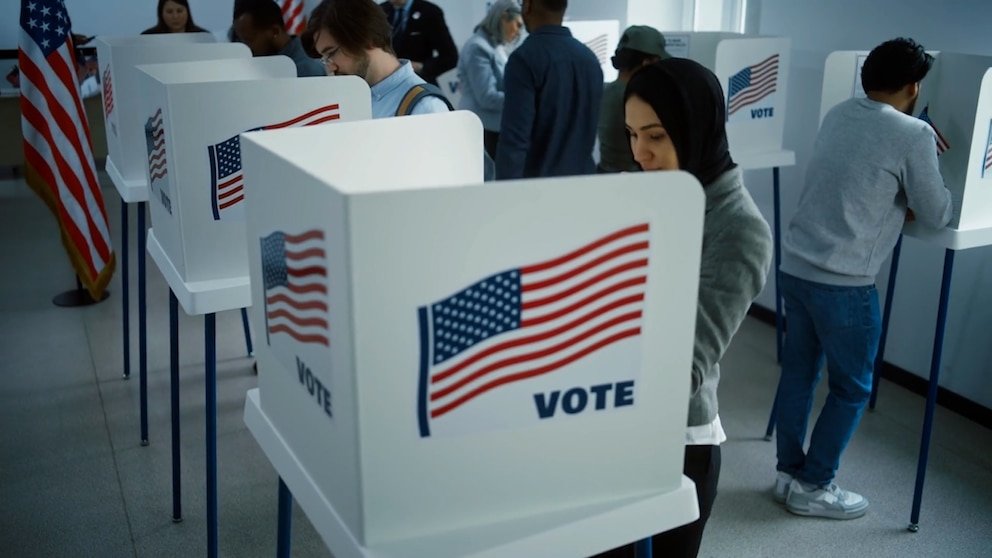
This bill requires individuals to provide documentary proof of U.S. citizenship when registering to vote in federal elections.
Specifically, the bill prohibits states from accepting and processing an application to register to vote in a federal election unless the applicant presents documentary proof of U.S. citizenship. The bill specifies what documents are considered acceptable proof of U.S. citizenship, such as identification that complies with the REAL ID Act of 2005 that indicates U.S. citizenship.
Further, the bill (1) prohibits states from registering an individual to vote in a federal election unless, at the time the individual applies to register to vote, the individual provides documentary proof of U.S. citizenship; and (2) requires states to establish an alternative process under which an applicant may submit other evidence to demonstrate U.S. citizenship.
Each state must take affirmative steps on an ongoing basis to ensure that only U.S. citizens are registered to vote, which shall include establishing a program to identify individuals who are not U.S. citizens using information supplied by certain sources.
Additionally, states must remove noncitizens from their official lists of eligible voters.
The bill allows for a private right of action against an election official who registers an applicant to vote in a federal election who fails to present documentary proof of U.S. citizenship.
The bill establishes criminal penalties for certain offenses, including registering an applicant to vote in a federal election who fails to present documentary proof of U.S. citizenship.
Click HERE for the complete text.
Points to Ponder
SECTION 2: Ensuring only citizens are registered to vote in Elections for federal office.
Several forms of proof are allowed or required, including:
- A form of identification issued consistent with the requirements of the REAL ID Act of 2005 that indicates the applicant is a citizen of the United States.
- The applicant’s official United States military identification card, together with a United States military record of service showing that the applicant’s place of birth was in the United States.
- A valid government-issued photo identification card issued by a Federal, State or Tribal government showing that the applicant’s place of birth was in the United States.
- Requiring documentary proof of United States citizenship with national mail voter registration form
This makes no sense because a REAL ID does not list a person’s citizenship status, and noncitizens can obtain a REAL ID.
Military personnel generally do not have access to their record of service.
These types of ID usually do not show a place of birth.
This REQUIRES people to show their Documentary Proof of Citizenship (DPOC) in person at the office of an election official. If the DPOC is not delivered in this manner, the voter registration will be rejected. This means homebound disabled and elderly people will not be able to use mail-in voting, and neither will military personnel stationed overseas, and citizens living overseas.
Section 2(f) is a doozy:
At the request of a State election official (including a request related to a process established by a State under paragraph (2)(A) or (2)(B)), any head of a Federal department or agency possessing information relevant to determining the eligibility of an individual to vote in elections for Federal office shall, not later than 24 hours after receipt of such request, provide the official with such information as may be necessary to enable the official to verify that an applicant for voter registration in elections for Federal office held in the State or a registrant on the official list of eligible voters in elections for Federal office held in the State is a citizen of the United States, which shall include providing the official with such batched information as may be requested by the official.
This means that is a local election official is not satisfied with your documentation, they will contact the appropriate federal agenc(y)(ies) to verify your information, and those agencies MUST respond with an answer within 24 hours of receiving the request.
A 24 hour processing time will be virtually impossible. Government agencies are already understaffed and always running behind. A sudden influx of thousands of documents coming in just before an election will overwhelm workers. They would need to put other tasks on hold while they rush to cross-reference the given information with other agencies to verify the applicant’s status. Mistakes will be made, and many applications may not be approved in time for the applicant to vote.
The Scaremongering
Alarmist conspiracies about the Act are going around on social media, but keep in mind, first it has to pass, and if it does, it’s impossible to know how it will all play out in practice. Are the predictions by Democratic lawmakers grounded in reality?
Here’s what I know about another recent issue:
When lawmakers were fighting over the so-called “Big Beautiful Bill”, the Trump admin swore that the cuts to food stamps, Medicaid and Medicare would only affect the illegals receiving these benefits. The Democrats repeatedly pointed out that illegals already weren’t participating in those programs (which is true), and the cuts would not affect legal citizens. The Trump admin and Trump’s followers insisted the radical leftists were just stirring up trouble about something that would never happen.
I also saw two or three pressers in which the Trump admin was asked specifically about Meals on Wheels: would the local Meals on Wheels programs lose funding? The answer was an adamant NO! Meals on Wheels would not be affected.
Then the Big Beautiful Bill passed. Millions of Americans have had their food stamps reduced, and some have lost them altogether. Millions of Americans are receiving fewer services from the Medicaid and Medicare programs.
Funds were cut to the federal agencies which trickle money down to local Meals on Wheels programs. The result is, those in more poor and rural areas are badly hurting. Some are hanging on by a thread: providing smaller meals, or fewer meals. Some fear they may have to shut down completely.
If Democrats had been wrong about the benefit cuts, I would be skeptical about their claims that SAVE will make it harder for people to vote, especially the poor. But now I wonder if they’re right?
I do think they may be exaggerating. Really, I think it won’t be quite as bad as they say. But it’s just a wait-and-see situation.
Useful Links
The National Voter Registration Act (NVRA) of 1993
Voter Verification Without ID Documents


More Great Stories by Cathy

Fox News is Fake News [UPDATE OCT 31]
Right vs Left and Short Memories