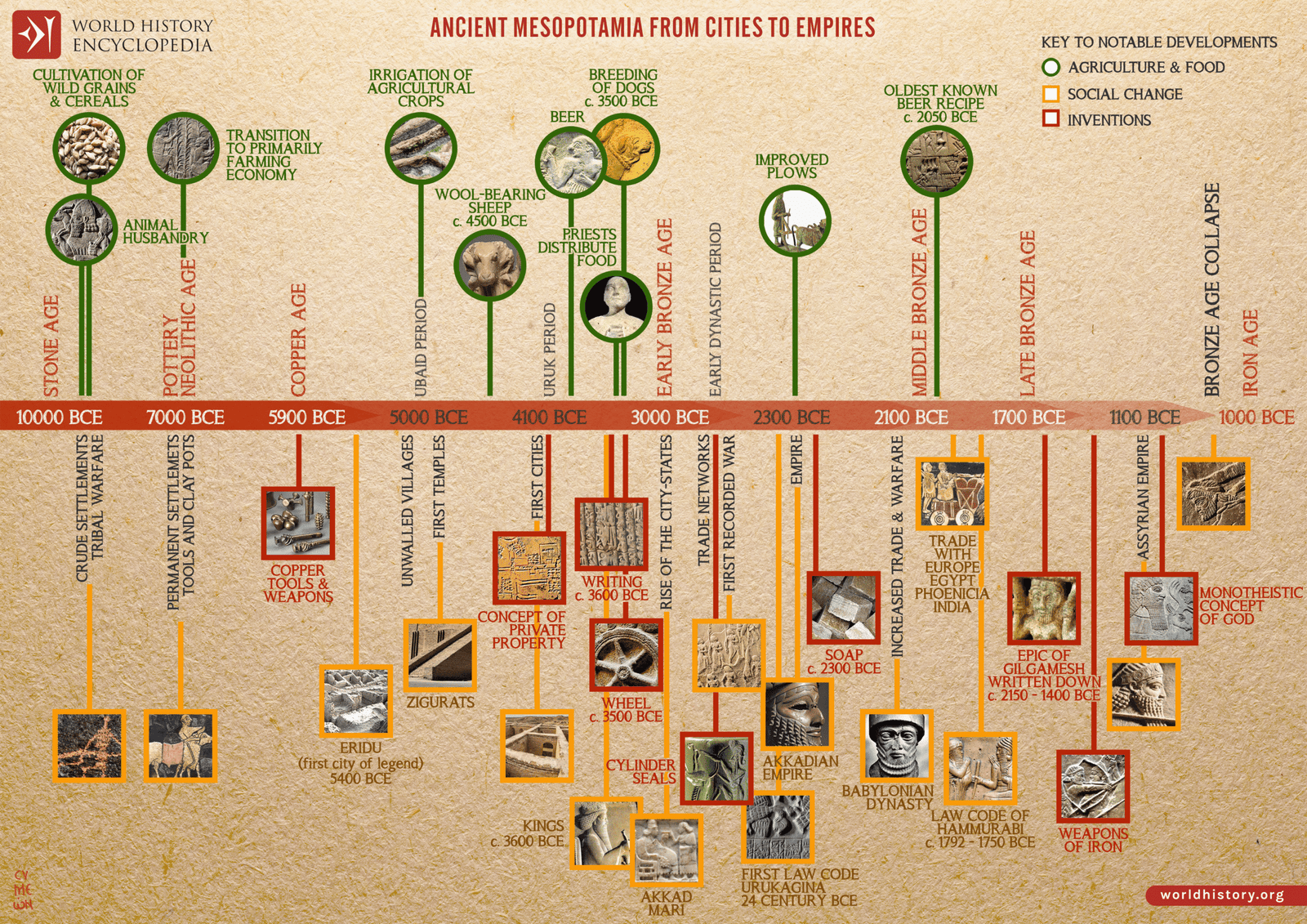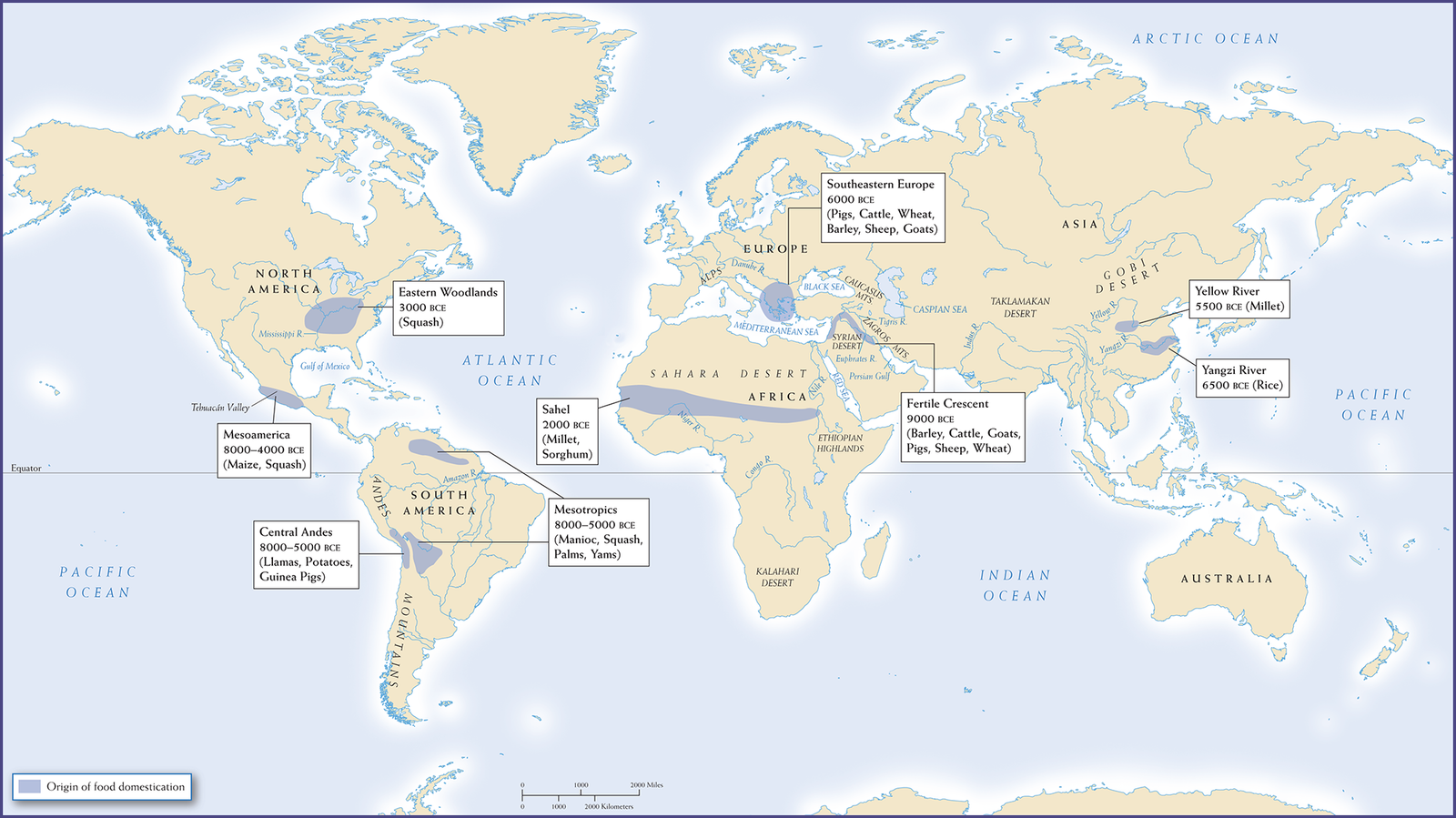

Timeline of Ancient Civilizations
This is not a public post. It’s a reference page for my own use to aid me in my research. I update it sporadically and correct mistakes when I detect them.
If you’re not me, then you’re here because I gave you the link, or you clicked through it from another blog post. Feel free to share it. It’s not a secret.
BC
- c. 20000
- c. 11700
- c. 12,500-9500
- c. 10000
- c. 9000
- c. 8000
- c. 7700
- c. 7500
- c. 7000
- c. 7000-2500
- c. 6700
- c. 6500
- c. 6500 – 6000
- c. 6500 – 3800
- c. 6200
- c. 6200–5700
- c. 6000
- c. 6000-5400
- c. 5400
- c. 5000
- c. 5000-4500
- c. 5000-4000
- c. 5000-3000
- c. 4500
- c. 4500-3750
- c. 4300
- c. 4000
- c. 4000-3500
- c. 4000-3000
- c. 4000-1750
- c. 3807-3806
- c. 3700-2800
- c. 3600
- c. 3500
- c. 3500-3200
- c. 3400
- c. 3300-2600
- c. 3200
- c. 3200–3000
- c. 3100
- c. 3100-2600
- c. 3100-2500
- c. 3000
- c. 3000-2900
- c. 3000-2800
- c. 3000-2500
- c. 3000-2300
- c. 2900-2750
- c. 2800
- c. 2700
- c. 2700 – 2200
- c. 2600
- 2600-2130
- 2560
- c. 2550
- c. 2500
- c. 2500-2000
- c. 2500 – 1500
- Late 24th century
- c. 2400
- 2350
- 2334 – 2279
- 2334 – 2218
- c. 2330
- 2291
- c. 2250
- c. 2200
- c. 2200 – 2100
- c. 2150-1400
- 2115
- c. 2112-2004
- c. 2100-1300
- c. 2055
- c. 2040-1640
- c. 2000
- c. 2000-1600
- c. 1900
- c. 1900-1400
- c. 1850
- c. 1894-1595
- c. 1800
- c. 1800-238
- 1795-1750
- c. 1792
- 1787
- 1780
- c. 1772
- c. 1760-1757
- 1755
- c. 1750
- 1700 – 1400
- c. 1700
- 1680
- c. 1600
- c. 1600-1200
- c. 1600-1100
- 1595
- c. 1570-1155
- c. 1570-1070
- 1550
- c. 1550-1150
- c. 1550-1070
- c. 1550
- c. 1500
- c. 1500 – 400
- 1472
- c. 1450
- c. 1400
- c. 1400-1000
- c. 1365–612
- c. 1350
- c. 1350-1250
- c. 1344-1322
- c. 1332-1323
- c. 1321
- c. 1300-750
- c. 1285
- c. 1250
- c. 1250-1220
- 1244-1208
- 1220
- c. 1209
- c. 1200
- c. 1200-1150
- c. 1180
- c. 1100
- c. 1150-800
- c. 1100-900
- 1080
- 1069-664
- c. 1050
- 1050-950
- c. 1046
- c. 1000
- c. 1000-961
- c. 970-931
- c. 924
- c. 911-609
- c. 900
- c. 890
- c. 858-853
- 853
- 814
- 808
- c. 800
- c. 800-480
- c. 788
- c. 785
- 776
- c. 770-750
- c. 770–476
- 753
- c. 750
- 747-656
- 745
- 734
- c. 732
- 729
- c. 728
- 722-705
- c. 721-612
- c. 720
- c. 705-689
- c. 700
- c. 680
- c. 680-669
- 664-332
- 664-610
- 664-539
- c. 653
- c. 650
- c. 650-630
- c. 650 – 550
- c. 626-539
- 621
- 612
- 605-562
- c. 600
- c. 594
- 587-586
- c. 582-485
- 570-526
- c. 570-475
- 563
- 551
- 550
- c. 550-450
- c. 550-350
- 549
- 546
- 544
- 539
- 539-530
- 530
- 525
- 522-486
- 516–515
- c. 512-513
- 509
- 508-507
- 500
- 500-330
- 499
- 490
- 490-479
- 486
- 485
- 483
- 480
- c. 480-323
- 479
- 475
- c. 470-469
- 465
- 460
- 458
- c. 450-430
- c. 450-420
- 449
- 447
- 441
- 432
- 431-404
- c. 424-400
- 431
- 429
- 427
- 424
- 404
- 404-343
- c. 400
- c. 400-300
- 399
- 384
- 370
- 343
- 334-330
- 326
- 323
- c. 323-31
- 322
- 321
- 312
- c. 312-63
- 305
- c. 300
- 273
- 261
- 257
- 255
- 250
- 232
- 230
- 221
- 216
- 207
- 206
- 202
- c. 200
- 185
- 167 – 160
- 149 – 146
- 146
- c. 145
- 129
- 121
- 111
- c. 100
- 100 BC – 100 AD
- 100 BC – 300 AD
- c. 82
- 71
- c. 63
- c. 60 – 44
- 58-57
- 49
- 44
- 31 – 30
- 30
- 27
- 27 – 22
- 27BC – 68AD
- 18
- 6
- 4
Cave painting flourishes in Spain and France, the most famous being the Cave of Lascaux in France.
End of the most recent glacial episode within the current Quaternary Ice Age.
The Natufian culture
Beginnings of agriculture in the Middle East.
Cultivation of wild cereals in the Fertile Crescent.
Wild sheep flocks are managed in the Zagros mountains.
Ovens in use in the Near East are applied to pottery production.
First domesticated wheats in the Fertile Crescent.
Long-distance trade in obsidian begins.
Jarmo is established, one of the earliest known agricultural village settlements.
Domestication of goats.
Neolithic and Chalcolithic periods on Cyprus.
Domestication of sheep.
Domestication of pigs.
Flax used to make textiles
Hassuna Culture (in northern Iraq), known for early farming and distinct pottery.
The Ubaid people established the first settled agricultural villages in southern Iraq, laying the foundation for the Sumerian civilization.
First copper smelting in Anatolia.
Samarra Culture (central Mesopotamia), characterized by finely painted pottery; the Ubaid may have developed directly from this, particularly in the south.
First irrigation.
Domestication of cattle.
First fortified settlement at Ugarit.
Çatal Höyük develops: Wheat, vegetables, and barley are grown.
Nineveh is first settled.
Halaf Culture (northern Syria and Mesopotamia). The Ubaid eventually replaced or integrated with them.
Founding of Eridu
Irrigation and agriculture begin in earnest in Mesopotamia.
Hierarchical societies emerge in southeast Europe.
Godin Tepe settled.
The city of Uruk founded, the very first true city. At its peak around 2800 BC, it had a population between 40,000 and 80,000, making it the largest city in the world to date.
Megaliths are erected at the Neolithic site of Locmariaquer, north-west France
Megalithic structures erected at Carnac, north-west France..
Invention of the plow.
The Sumerians built their first temple.
The Neolithic village of Banpo is inhabited.
First megalithic tombs in Europe.
First settlement of Ur.
Use of wool for textiles.
Medway Tombs of Kent, including Chesnuts, Addington and Coldrum, are constructed.
Clyde Tombs of Western Scotland and the Carlingford Tombs of Northern Ireland are constructed.
The Sumer civilization emerges
Uruk period in Mesopotamia.
First cities in the region of Sumer
Sumerian civilization in the Tigris-Euphrates valley.
The Sweet Track, a Neolithic wooden pathway, is constructed in Somerset, Britain.
Neolithic farmstead the Knap of Howar inhabited on Papa Westray, Orkney.
Invention of writing in Sumer at Uruk.
Cotswold-Severn Group Long Barrows are constructed, which spanned from the north Wessex Downs, Cotswold Hills, South Wales coast, and the Brecon Beacons.
Refinement and spread of Sumerian cuneiform writing
Priests become the rulers of Mesopotamian cities.
The Barnhouse Settlement constructed and inhabited.
Cycladic culture in Greece.
Caral–Supe civilization begins in Peru.
Rise of Proto-Elamite Civilization in Iran.
Egyptian hieroglyphs are first used.
Stonehenge Phase I – construction begins. In its first version, it consisted of a circular ditch and bank, with 56 wooden posts.
Early Dynastic period of Egypt
The Neolithic village of Skara Brae in Scotland was inhabited, stone walls built.
Cucuteni–Trypillia culture is established in Romania and Ukraine.
Jiroft culture begins in Iran.
First known use of papyrus by Egyptians.
Domestication of the horse in the Yamnaya culture.
Aegina inhabited during Neolithic period.
Stonehenge Phase II – Digging of the Aubrey Holes, which probably contained wooden posts (or perhaps bluestones). Stonehenge functions as a cremation cemetery.
Mari, the earliest known planned city, is built near the eastern bank of the Euphrates.
The Neolithic chambered cairn known as Maeshowe constructed and in use.
Earliest evidence of autochthonous iron production in West Africa.
The Pastoral Neolithic culture builds East Africa’s earliest and largest monumental cemetery at Lothagam North Pillar Site.
Early Dynastic Period of Mesopotamia
Kot Diji phase of the Indus Valley Civilisation begins.
Longshan culture begins in China.
Historical reign of Gilgamesh
Minoan civilization ancient palace city Knossos reaches 80,000 inhabitants.
Rise of Elam in Iran.
Egypt- The Old Kingdom
Oldest known surviving literature: Sumerian texts from Abu Salabikh, including the Instructions of Shuruppak and the Kesh temple hymn.
Mature Harappan phase of the Indus Valley civilization (in present-day Pakistan and India) begins.
Emergence of Mayan culture in the Yucatán Peninsula.
Structure Eight (so called) erected at Barnhouse Settlement after village abandoned.
Building of the pyramids
Pyramid Texts
King Khufu completes the Great Pyramid of Giza.
The Land of Punt in the Horn of Africa first appears in Egyptian records around this time.
Phase III at Stonehenge, the refashioning of the simple earth and timber henge into a unique stone monument.
Village of Skara Brae is abandoned for unknown reasons.
First Dynasty of Lagash under King Eannutum is first empire in Mesopotamia.
Mohenjo-daro was built (original name unknown). It was one of the largest cities of the ancient Indus Valley Civilization.
The Balnuaran of Clava (Clava Cairns) is built.
Kerma culture begins in Nubia.
Akkadian Empire is founded, dating depends upon whether the Middle chronology or the Short chronology is used.
Earliest Sumerian sources to mention migrating Amorites in Mesopotamia.
First code of laws by Urukagina, king of Lagash.
Sargon of Akkad (the Great) reigns over Mesopotamia and thus creates the world’s first empire.
The Akkadian Empire rules Sumer.
Sargon of Akkad sacks Ur.
Pharaoh Teti is thought to be the earliest known victim of assassination.
Oldest known depiction of the Staff God, the oldest image of a god to be found in the Americas.
Completion of Stonehenge.
4.2-kiloyear event: a severe aridification phase, likely connected to a Bond event, which was registered throughout most of North Africa, Middle East and continental North America. It was one of the most severe climatic events of the Holocene epoch. It defines the beginning of the current Meghalayan age in the Holocene epoch. Starting around 2200 BC, it most likely lasted the entire 22nd century BC. Related droughts very likely caused the collapse of the Old Kingdom in Egypt and the Akkadian Empire in Mesopotamia.
The tales of Gilgamesh written which inform the Epic of Gilgamesh.
Traditional date for the legendary foundation of Armenia by Hayk.
Ur III Dynasty
Shulgi I institutes scribal academies.
Bilgames poems (version of The Epic of Gilgamesh)
Assyria existed as a city-state in Mesopotamia.
The Middle Kingdom begins in Egypt.
Tale of Sinuhe (a classic work of ancient Egyptian literature)
Coffin Texts (a collection of over 1,100 ancient Egyptian funerary spells, incantations, and maps)
Bronze Age begins in Northern Europe.
Domesticated horses introduced in Mesopotamia.
The last mammoth population, on Wrangel Island in Siberia, goes extinct.
Amorite period in Mesopotamia.
Founding of Babylon
Ashur, capital of Assyria, is founded.
Erlitou culture begins in China.
Trade flourishes between Mesopotamia and other regions.
Alphabetic writing emerges.
First Babylonian Empire
“Dialogue Between a Man and his Soul” (or Dispute Between a Man and His Ba) – a renowned Ancient Egyptian philosophical text. It features a suicidal man debating the value of life versus death with his soul (ba).
Teaching of Khety, aka The Satire of the Trades, aka The Instruction of Kheti: a didactic work of ancient Egyptian literature. It takes the form of an instruction and was composed by a scribe from Sile named Kheti for his son Pepi.
The Old Babylonian Epic of Gilgamesh constitutes the earliest complete version of that narrative.
Nuragic Civilization. Flourished on the Mediterranean island of Sardinia, renowned for building over 7,000 megalithic, defensive stone towers. They produced sophisticated bronze, monumental “Giants’ Tombs” and large-scale stone sculptures.
Reign of Hammurabi, king of Babylon.
King Hammurabi builds walls of Babylon.
Hammurabi of Babylon conquers Uruk and Isin.
Oldest Record of Code of Hammurabi.
Code of Hammurabi (Babylonian legal text, comprising 282 laws). One of the earliest codes of law in the world.
Surpassing All Other Kings (version of The Epic of Gilgamesh)
The specific Akkadian epic was known by different titles. “Surpassing All Other Kings” was an earlier title, while the most famous version, the Standard Babylonian version, begins with the words “He who Saw the Deep”.
Hammurabi of Babylon destroys the city of Mari. The people of Mari are spared according to Hammurabi.
Hammurabi rules the whole of Mesopotamia from Babylon.
Mycenaean civilization begins in mainland Greece.
Elamite invades and conquers Ur. This and the Amorite migration ends the Sumerian civilization.
The Proto-Sinaitic script is the oldest alphabet created in Egypt.
Indus Valley Civilization comes to an end but is continued by the Cemetery H culture; The beginning of Poverty Point culture in North America.
Hurrians occupy Assyria.
Minoan eruption destroys Akrotiri and causes damage to some Minoan sites in eastern Crete.
The beginning of Shang dynasty in China; evidence of a fully developed writing system (see Oracle bone script).
Tumulus culture
Mycenaean Civilization
King Mursilis of the Hittites sacks Babylon, ending Amorite rule.
Babylonian “dark ages” begins
Kassite Dynasty in Babylon
Egypt- The New Kingdom
The Hurrian kingdom of Mitanni is founded.
Egypt- Construction of the temples at Karnak
Egypt:
Book of the Dead;
Horus and Seth;
The Hymn to Osiris;
Love Lyrics and Harpers Songs
The New Kingdom begins in Egypt.
Composition of the Rigveda is completed.
Nok culture begins in West Africa.
Rise of the kingdom of Mitanni.
Egyptian empire extends to the Euphrates.
Zoroastrianism founded by the prophet Zarathustra (Zoroaster)
Olmec civilization flourishes in Pre-Columbian Mexico, during Mesoamerica’s Formative period.
Mittani annexes Assyria.
Development of Linear B (Minoan) script
Oldest known song with notation.
Assyria regains its independence.
He Who Saw the Deep compiled by Sîn-lēqi-unninni (version of The Epic of Gilgamesh)
Marks the rise, peak, and fall of the Middle and Neo-Assyrian Empires. Centered in Mesopotamia, Assyria became a dominant military power, expanding across the Near East before its collapse in 612 BC.
Peak of Mitanni power
The Hittite Empire is at its peak.
King Suppiluliuma I of the Hittites sacks the Mitanni capital Washukanni and installs Artatama II as vassal king.
Rule of Tutankhamun
Western Mittani is conquered by the Hittites.
Urnfield culture
Peak of Hittite power.
Tollense battle- Massive Bronze Age battle, took place in current day northern Germany.
The Trojan War [Troy]
Reign of Tukulti-Ninurta I, King of Assyria.
Babylon is under Assyrian control.
The Merneptah Stele is the first non-biblical reference to the Israelites.
The Hallstatt culture begins.
Late Bronze Age collapse occurs in Southwestern Asia and in the Eastern Mediterranean region.
Collapse of Mycenaean Civilization; loss of writing
Egypt invaded by Sea Peoples
Invasion by Sea Peoples and drought cause mass abandonment of cities in Mesopotamia.
This period is also the setting of the Iliad and the Odyssey epic poems (which were composed about four centuries later).
Disintegration of Hittite Empire.
Use of Iron spreads.
Greek Dark Age
Greece: Post-Mycenaean Era. Small, isolated communities developed, laying the groundwork for independent rule.
Aramaeans invade Mesopotamia.
Egypt: Third Intermediate Period – Period of political disunity
The Phoenician alphabet is created.
Greek colonization of Asia Minor (western coast of Turkey)
The Zhou force, led by King Wu of Zhou, overthrows the last king of Shang dynasty; Zhou dynasty established in China.
Chaldeans occupy Ur.
The second stream of Bantu expansion reaches the great lakes region of Africa, creating a major population center.
Reign of King David in Israel (some sources say 1010-970)
Reign of King Solomon
Israelites split into two kingdoms, Israel and Judah,
Neo-Assyrian Empire
Greece- Beginning of the rise of the polis (city-state)
Approximate date for the composition of the Iliad and the Odyssey.
Assyrians conquer Babylon
Babylonian kings depend on Assyrian military support.
Foundation of Carthage by the Phoenicians in Tunisia.
Formation of the Kingdom of Macedonia by King Karanos
Rise of Greek city-states, exemplified by the rise of Athens, Sparta, Corinth, and others.
Greece – Archaic Period. This age saw the emergence of democracy, the invention of coinage, the rise of hoplite warfare, and the emergence of the Greek alphabet.
Iron Age begins in Sungai Batu (Old Kedah).
Rise of the Kingdom of Kush.
Classical antiquity, defined by the rise and influence of Ancient Greece and Rome.
Greece Olympic Games established
Greeks adopt Phoenician alphabet via Ionian colonies
Spring and Autumn period begins in China (named after the Spring and Autumn Annals, a chronicle attributed to Confucius). Zhou dynasty’s power diminished, warring vassal states rose to power.
Traditional date of the Founding of Rome.
Greek colonization of Southern Italy and Sicily begins
Dynasty 25 – Nubian kings conquer and unify Egypt
Tiglath-Pileser III becomes the new king of Assyria. He conquers neighboring countries and turns Assyria into an empire.
Babylon is captured by Chaldeans.
Assyrian captivity begins, creating the Ten Lost Tribes.
Babylon is occupied by Assyrians.
Rise of the Median Empire.
Peak of the Assyrian empire under the reign of Sargon II.
Sargonid Dynasty begins in Assur
Homer, Iliad
Sennacherib I moves Assyrian capital to Nineveh; wages war on Babylon and Judah
Homer, Odyssey;
Hesiod, Theogony and; Works and Days [Ithaca]
The construction of Marib Dam in Arabia Felix, in modern Saudi Arabia and Yemen.
Archilochus (lyric poet) [Paros]
Assyrian conquest of Egypt
Egypt -Late Period
Reign of Psammetichus I; Greek and Carian mercenaries settle in Egypt
Saite Dynasty (Dynasty 26); Egypt is unified and a major power in the Near East
Rise of Achaemenid dynasty.
Greek colonization around the Black Sea begins
Tyrtaeus (poet/soldier) [Sparta]
The Urewe culture dominates the African Great Lakes region. It was one of Africa’s oldest iron smelting centres.
Neo-Babylonian Empire
Draco replaces oral law with written law in Classical Athens, considered one of the earliest developments of the Athenian democracy.
The Babylonians, Medes, and Scythians create an alliance and destroy Nineveh, causing the fall of the Neo-Assyrian empire.
Nebuchadnezzar II is king of Babylon.
Sappho (lyric poet) [Lesbos]
Thales (philosopher) [Miletus]
Sixteen Mahajanapadas (“Great Realms” or “Great Kingdoms”) emerge in India.
Evidence of writing system appears in Oaxaca used by the Zapotec civilization.
Rise of the Sao civilisation near Lake Chad.
Early Cholas mentioned in Sangam literature.
Solon (politician and poet) is appointed Archon of Classical Athens and begins issuing citizenship and judicial reforms, giving Athenian citizens the right to participate in government.
Babylonians capture Jerusalem and destroy temple; beginning of the Babylonian exile [Babylon]
Anacreon (poet/reveler
Reign of Amasis
Xenophanes (poet/philosopher)
Siddhartha Gautama (Buddha), founder of Buddhism is born as a prince of the Shakya clan, which ruled parts of Magadha, one of the Mahajanapadas.
Confucius, founder of Confucianism, is born.
Foundation of the Achaemenid Empire (Persia) by Cyrus the Great.
Genesis and Exodus
Book of Job
Mahavira, founder of Jainism, is born.
Cyrus the Great overthrows Croesus, King of Lydia.
Rise of Magadha as the dominant power under Bimbisara.
Cyrus the Great marched his Achaemenid Persians into Elam, ending the 2,500-year existence of the Elamite state.
Cyrus the Great conquers Babylon and frees the captive peoples, including the Israelites
Cyrus Cylinder is created
Death of Cyrus the Great.
King Cambyses II of Persia conquers Egypt
Reign of King Darius I (Darius the Great) in Persia
Bisitun Inscription
Darius expanded the Achaemenid Empire into the Indus Valley
Darius subjugates eastern Thrace, annexes the Libyan Kingdom, and Macedonia submits voluntarily
Expulsion of Lucius Tarquinius Superbus, founding of Roman Republic (traditional date).
Cleisthenes Reforms the Athenian Constitution, establishing democracy.
Pāṇini standardizes the grammar and morphology of Sanskrit in the text Aṣṭādhyāyī. Panini’s standardized Sanskrit is known as Classical Sanskrit.
The Achaemenid Empire rules in Mesopotamia
Persian Royal Road in use.
King Aristagoras of Miletus incites all of Hellenic Asia Minor to rebel against the Persian Empire, beginning the Greco-Persian Wars.
Greek city-states defeat the Persians at the Battle of Marathon.
War between Greece and Persia
Death of Darius the Great
Babylon is destroyed by Xerxes, King of Persia.
Death of Gautama Buddha.
Persian invasion of Greece by Xerxes I; Battles of Thermopylae and Salamis.
Classical Greece
Death of Confucius.
Warring States period begins in China as the Zhou king became a mere figurehead; China is annexed by regional warlords.
Birth of Socrates.
Murder of Xerxes I.
Birth of Democritus.
Oresteia by Aeschylus, the only surviving trilogy of ancient Greek plays, is performed.
Herodotus visits Egypt
Herodotus composes his Histories of the Persian War
The Greco-Persian Wars end.
Construction of the Parthenon begins in Athens
Sophocles, Antigone
The Parthenon is completed.
Peloponnesian War (Athens and allies vs. Sparta and allies)
Thucydides, History of the Peloponnesian War
Rise of Sophistic Philosophy (Gorgias, Antiphon, Protagoras, Prodicus and Hippias)
Beginning of the Peloponnesian War between the Greek city-states.
Sophocles’s play Oedipus Rex is first performed.
Birth of Plato.
Nanda dynasty comes to power in Magadha.
Athens loses Peloponnesian War to Sparta
Dynasties 28-30: Persians expelled from Egypt; last period of indigenous rule
Rise of the Garamantes as an irrigation-based desert state in the Fezzan region of Libya.
Zapotec culture flourishes around city of Monte Albán.
Pandya dynasty is founded in South India.
Book of Esther
Trial of Socrates.
Birth of Aristotle.
Death of Democritus.
Persian Re-conquest of Egypt
Alexander the Great (Alexander III of Macedon) defeated the Persian armies at Granicus, Issus and Gaugamela, completing his conquest of Persia. Then he marched on Susa and Persepolis, which surrendered and was destroyed by fire in early 330 BC.
Alexander the Great defeats Indian king Porus in the Battle of the Hydaspes River.
Death of Alexander the Great at Babylon.
The Hellenistic Age. Greek thought and culture infuses with indigenous people.
Death of Aristotle.
Chandragupta Maurya overthrows the Nanda dynasty of Magadha.
Establishment of the Seleucid Empire by Seleucus I Nicator. The empire existed until 63 BC.
Seleucos conquers Babylon and founds the Seleucid dynasty.
Duration of the Seleucid Empire.
Chandragupta Maurya seizes the satrapies of Paropamisadae (Kabul), Aria (Herat), Arachosia (Qanadahar) and Gedrosia (Baluchistan) from Seleucus I Nicator, the Macedonian satrap of Babylonia, in return for 500 elephants.
Completion of Euclid’s Elements.
Pingala uses zero and binary numeral system.
Sangam literature (Tamil: சங்க இலக்கியம், Canka ilakkiyam) period in the history of ancient southern India (known as the Tamilakam)
Construction of the Great Pyramid of Cholula, the world’s largest pyramid by volume begins in Cholula, Puebla, Mexico (the Great Pyramid of Giza built 2560 BC Egypt stands 146.5 meters, making it 91.5 meters taller).
Ashoka becomes the emperor of the Maurya Empire.
Kalinga War.
An Dương Vương takes over Việt Nam (then Kingdom of Âu Lạc).
Ashoka sends a Buddhist missionary led by his son Mahinda to Sri Lanka (then Lanka).
Rise of Parthia (Ashkâniân), the second native dynasty of ancient Persia.
Death of Emperor Ashoka; Decline of the Mauryan Empire.
Emergence of Satavahana in South India.
Qin Shi Huang unifies China, end of Warring States period; marking the beginning of Imperial rule in China which lasts until 1912. Construction of the Great Wall of China by the Qin dynasty begins.
Battle of Cannae – Rome defeated in major battle in the second Punic War.
Nanyue Kingdom extends from Guangzhou to North Việt Nam
Han dynasty established in China, after the death of Qin Shi Huang; China in this period officially becomes a Confucian state and opens trading connections with the West, i.e. the Silk Road.
Scipio Africanus defeats Hannibal at Battle of Zama.
El Mirador, largest early Maya city, flourishes.
Paper is invented in the Han dynasty.
Chera dynasty in South India.
Shunga Empire founded.
Maccabean Revolt.
Third Punic War between Rome and Carthage. War ends with the complete destruction of Carthage, allowing Rome to conquer modern day Tunisia and Libya.
Roman conquest of Greece.
Eucratides I dies.
Greco-Bactrian Kingdom collapses. Remnants move southwards to form the Indo-Greek Kingdom.
Parthians conquer Mesopotamia. The Silk Road to China is now controlled by the Parthians.
Roman armies enter Gaul for the first time.
First Chinese domination of Vietnam in the form of the Nanyue Kingdom.
Chola dynasty rises in prominence.
Bantu-speaking communities in the African Great Lakes regions develop iron forging techniques that enable them to produce carbon steel.
The earliest Bantu settlements in the Swahili coast appear on the archaeological record in Kwale County in Kenya, Misasa in Tanzania and Ras Hafun in Somalia.
Burebista becomes the king of Dacia.
Death of Spartacus. End of the Third Servile War, a major slave uprising against the Roman Republic.
The Siege of Jerusalem leads to the conquest of Judea by the Romans.
Burebista conquers territories from south Germany to Thrace, reaching the coast of the Aegean Sea.
Ctesiphon becomes Parthian capital during the reign of Orodes II.
Roman Civil War between Julius Caesar and Pompey.
Julius Caesar murdered by Marcus Junius Brutus and others.
Burebista is assassinated and his empire breaks into 4, and later 5 kingdoms, in modern-day Romania.
Battle of Actium.
The Roman conquest of Ptolemaic Egypt.
Cleopatra ends her reign as the last active ruler of the Ptolemaic Kingdom of Egypt.
End of the Roman Republic and formation of the Roman Empire: Augustus is given titles of Princeps and Augustus by Roman Senate – beginning of Pax Romana. Formation of influential Praetorian Guard to provide security to Emperor.
Amanirenas, the kandake (Queen) of the Kingdom of Kush, leads Kushite armies against the Romans.
Julio-Claudian Dynasty (Rome)
Three Kingdoms period begins in Korea.
Herod’s Temple is reconstructed.
Earliest theorized date for birth of Jesus of Nazareth.
Roman succession: Gaius Caesar and Lucius Caesar groomed for the throne.
Widely accepted date (Ussher) for birth of Jesus.
====================
====================
AD
- c. 1 – 50
- 9
- 14
- 23-79
- c. 30-33
- 37
- 39-81
- 40
- 41
- 43
- 54
- 56-120
- 66-73
- 68
- 69-79
- 70
- 79
- 98
- 100 – 940
- 106 – 117
- 117
- 122
- 126
- 138
- 161
- 180
- 180 – 181
- 192
- 200s
- 220
- c. 224-226
- 234
- 244 – 260
- 266
- 284
- 285
- 292
- 300 – 1000
- 301
- 313
- 316
- 325
- 330
- 335
- 337
- 350
- 354
- 361
- 378
- 380
- 392
- 406
- 407 – 409
- 410
- 415
- 420
- 429
- 439
- 455
- c. 455
- 476
- 651
- 770
The Periplus of the Erythraean Sea, a Graeco-Roman manuscript is written. It describes an established Indian Ocean Trade route.
Battle of the Teutoburg Forest, the Imperial Roman army’s bloodiest defeat.
Death of Roman Emperor Augustus Caesar (Octavian), ascension of hisopted son Tiberius to the throne.
Pliny the Elder
Crucifixion of Jesus, exact date unknown.
Death of Emperor Tiberius, ascension of his nephew Caligula to the throne.
Roman General Titus
Rome conquers Mauretania.
Emperor Caligula is assassinated by the Roman senate. His uncle Claudius succeeds him.
The Roman Empire enters Great Britain for the first time.
Emperor Claudius dies and is succeeded by his grand nephew Nero.
Tacitus, Roman Historian
First Jewish-Roman War
Emperor Nero commits suicide, prompting the Year of the Four Emperors in Rome.
Vespasian, emperor of Rome
Destruction of Jerusalem by the armies of Titus.
Destruction of Pompeii by the volcano Vesuvius.
After a two-year rule, Emperor Nerva dies of natural causes, hisopted son Trajan succeeds him.
Kingdom of Aksum forms in the Horn of Africa.
Roman Empire at largest extent under Trajan after having conquered modern-day Romania, Iraq and Armenia.
Trajan dies of natural causes. His adopted son Hadrian succeeds him. Hadrian pulls out of Iraq and Armenia.
Construction of Hadrian’s Wall begins.
Hadrian completes the Roman Pantheon.
Hadrian dies of natural causes. His adopted son Antoninus Pius succeeds him.
Death of Antoninus Pius. His rule was the only one in which Rome did not fight in a war.
Marcus Aurelius becomes emperor of the Roman Empire.
Reign of Marcus Aurelius officially ends. End of the Pax Romana.
Commodus becomes Roman Emperor.
Kingdom of Champa in Tay Nguyen.
The Buddhist Srivijaya Empire established in Maritime Southeast Asia.
Three Kingdoms period begins in China after the fall of Han dynasty.
Ardashir I defeated the last Parthian king, Artabanus IV, at the Battle of Hormozdgan, effectively overthrowing the Parthian Empire. This victory initiated the Sasanian Dynasty.
Emperor Maximinus Thrax is governor of Mesopotamia.
Defeat of Gordian III (238–244), Philip the Arab (244–249), and Emperor Valerian (253–260), by Shapur I of Persia (Valerian was captured by the Persians).
Emperor Wu of Jin established the First Jin dynasty providing a temporary unity of China after the devastating Three Kingdoms period.
Diocletian becomes emperor of Rome and splits the Roman Empire into Eastern and Western Roman Empires.
Diocletian begins a large-scale persecution of Christians.
The capital of the Roman empire is officially moved from Rome to Mediolanum (modern day Milan).
Growth of Azanian and Zanj settlements in the Swahili coast. Local industry and international trade flourish.
Diocletian’s Edict on Maximum Prices.
Armenia first to adopt Christianity as state religion.
Edict of Milan declared that the Roman Empire would tolerate all forms of religious worship.
Emperor Min of Jin executed, with northern China then controlled by various kingdoms founded by non-Han people. The Jin dynasty continues to rule the south.
Constantine the Great organizes the First Council of Nicaea.
Constantinople is officially named and becomes the capital of the eastern Roman Empire.
Samudragupta becomes the emperor of the Gupta Empire.
Emperor Constantine the Great dies, leaving his sons Constantius II, Constans, and Emperor Constantine II as the emperors of the Roman empire.
Constantius II is left sole emperor with the death of his two brothers.
Birth of Augustine of Hippo.
Constantius II dies, his cousin Emperor Julian succeeds him.
Battle of Adrianople, Roman army is defeated by the Germanic tribes.
Roman Emperor Theodosius I declares the Arian faith of Christianity heretical. Nicene (Catholic) Christianity is the official religion of the Roman Empire.
Theodosius I outlaws all religions other than Catholic Christianity and Judaism.
Romans are expelled from Britain.
Visigoths and other Germanic tribes cross into Roman-Gaul for the first time.
Visigoths sack Rome in 410 for the first time since 390 BC.
Germanic tribes enter Spain.
The general Liu Yu usurps the Jin in southern China, beginning the Liu Song dynasty.
Vandals enter North Africa from Spain for the first time.
Vandals have conquered the land stretching from Morocco to Tunisia by this time.
The Northern Wei dynasty unites northern China, beginning the Northern and Southern dynasties period.
Vandals sack Rome, capture Sicily and Sardinia.
Skandagupta repels a Huna people attack on India.
Romulus Augustulus, last Western Roman Emperor is forced to abdicate by Odoacer, a chieftain of the Germanic Heruli; Odoacer returns the imperial regalia to Eastern Roman Emperor Zeno in Constantinople in return for the title of dux of Italy; most frequently cited date for the end of ancient history.
Muslim Conquest of Mesopotamia.
Last recorded use of Clava Cairns site in antiquity.
- Brief ancient chronology (copied from Wikipedia)