

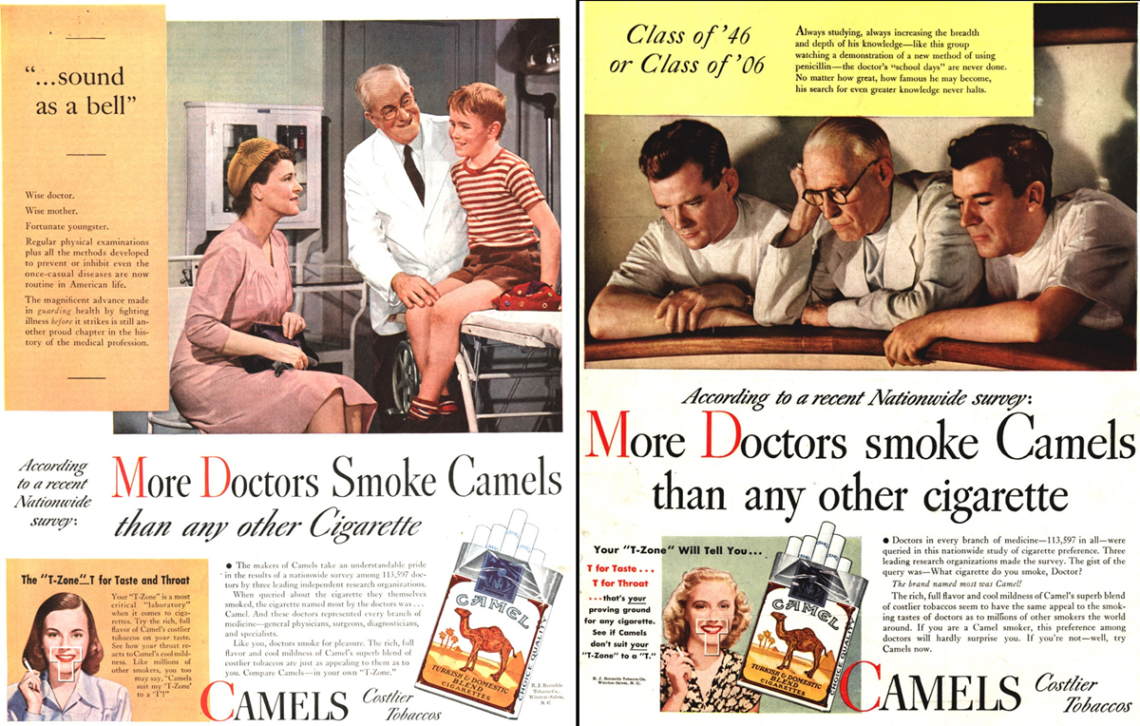
More Doctors Smoke Camels!
A Brief History of Tobacco
Tobacco is native to the Americas. It was cultivated and used in pipes, as cigars, and as snuff by indigenous peoples for medicinal and ceremonial purposes as early as 6000 BC. In the 1500s, Spanish and Portuguese sailors carried it to Europe, where it became wildly popular.
A French diplomat named Jean Nicot presented tobacco to the French court as a medicinal herb. It’s use became fashionable amongst the French nobility, and it was soon all the rage throughout Europe. (The word nicotine was derived from Jean Nicot’s name).
As the European appetite for tobacco grew, American colonists began growing it to meet the demand. It soon became a major crop grown for export.
Soon after tobacco was introduced to Europe, poor people, who couldn’t afford to buy it, would collect discarded cigar butts, shred them, and roll them in scraps of paper. This was first observed in Seville, Spain, where they became known as cigarrillos, or “little cigars.”
By the late 1700s and early 1800s, factories began hiring workers to hand-roll cigarettes. These workers were primarily women, called Cigarreras, and each one could roll about four cigarettes per minute.
Automated cigarette-making machines were invented in the 1880s by James A. Bonsack. A factory with one of these machines could produce 4 million cigarettes daily, compared to an average of 40,000 hand-rolled ones. This made cigarettes more affordable than cigars or pipe tobacco, which in turn resulted in greater consumption by the masses.
French and British troops began using cigarettes during the Napoleonic wars, and American soldiers used them in the Civil War. But it was during World Wars I and II that free cigarettes were provided in abundance to soldiers, and military personnel took the habit back home. This, combined with the use of cigarettes by movie stars in film, glamorized them and it became socially acceptable for all classes to smoke. The use of cigarettes quickly became the preferred form of tobacco, surpassing the popularity of cigars, pipes and snuff.
By the 1960s, 40% of American adults were smoking regularly, more than half of these being men.
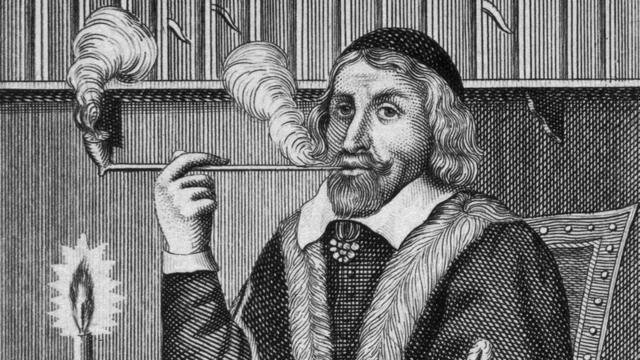
Early Health Warnings
In 1604, King James I wrote a Treatise on the Evils of Tobacco entitled A Counterblaste to Tobacco, in which he admonished users for sinning against God, and warned of the negative health consequences. In an effort to curb it’s use by his subjects, he imposed extraordinarily high import taxes on the weed.
The first clinical report linking tobacco to cancer was published in 1761 by London physician Dr. John Hill entitled Cautions Against the Immoderate Use of Snuff. This caused a stir in the medical community, many doctors calling Hill a quack, although some doctors had observed the same.
And the reports kept coming. A few examples of books, reports and papers warning of the dangers of tobacco use include:
- 1621: A Briefe Treatise, Concerning the Taking of the Fume Tobacco by Tobias Venner.
- 1720: A Dissertation on the Use and Abuse of Tobacco by unknown author.
- 1785: Medical Reports of the Effects of Tobacco by Thomas Fowler.
- 1795: German physician Samuel Thomas von Sömmerring noted a correlation between lip cancer and the use of clay pipes.
- 1805: Cautions to Young Persons Concerning Health by Benjamin Waterhouse.
It’s clear that many doctors made the connection between cancer and tobacco from early on, but much of the medical community did not take the correlation seriously.
Until the late 19th century, pipe and snuff were the most popular ways of using tobacco, resulting in mouth, tongue, and lip cancer. Cigarettes began gaining popularity in the 1890s, peaking in the 20th century, at which time the most common form of cancer resulting from tobacco use was lung cancer.
Early Advertising Campaigns
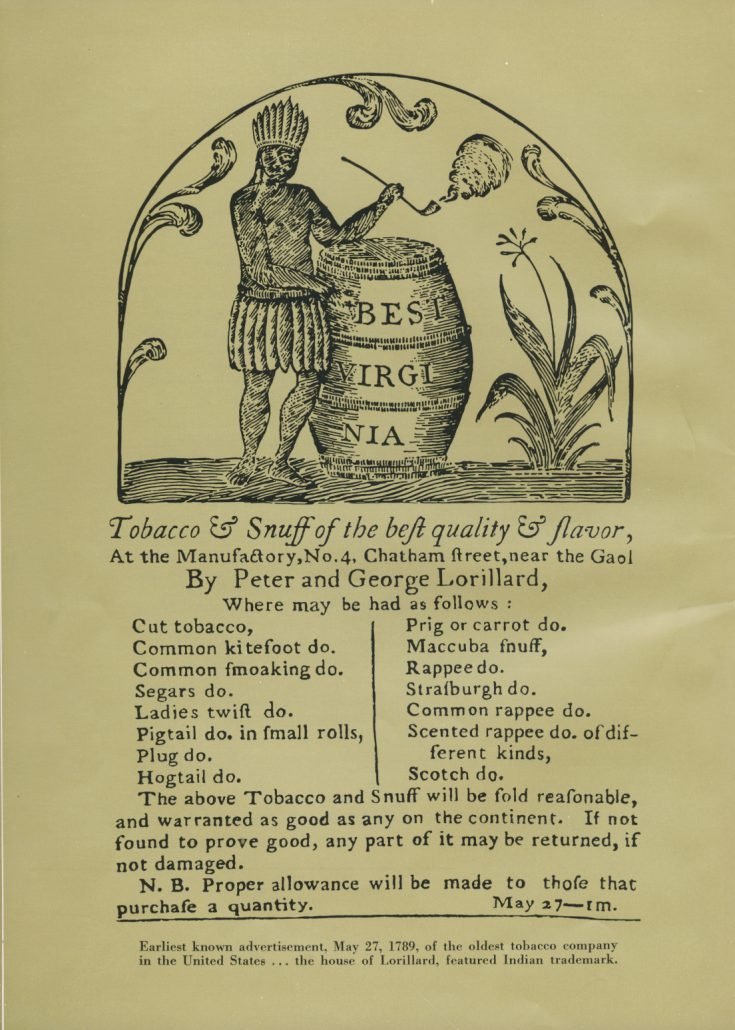
The first known print advertisement in America for tobacco appeared in 1789 in a New York City newspaper. The House of Lorillard ad included the image of an American Indian smoking a long clay pipe. Click the image below to see the full ad
In the mid 1800s, a color printing process called color lithography, or chromolithography, was invented, enabling printers to produce books with colorful illustrations and covers. The world exploded with color! Everywhere was brightly hued calendars, retail packaging, framed reproductions of famous paintings, greeting cards, and posters advertising products.
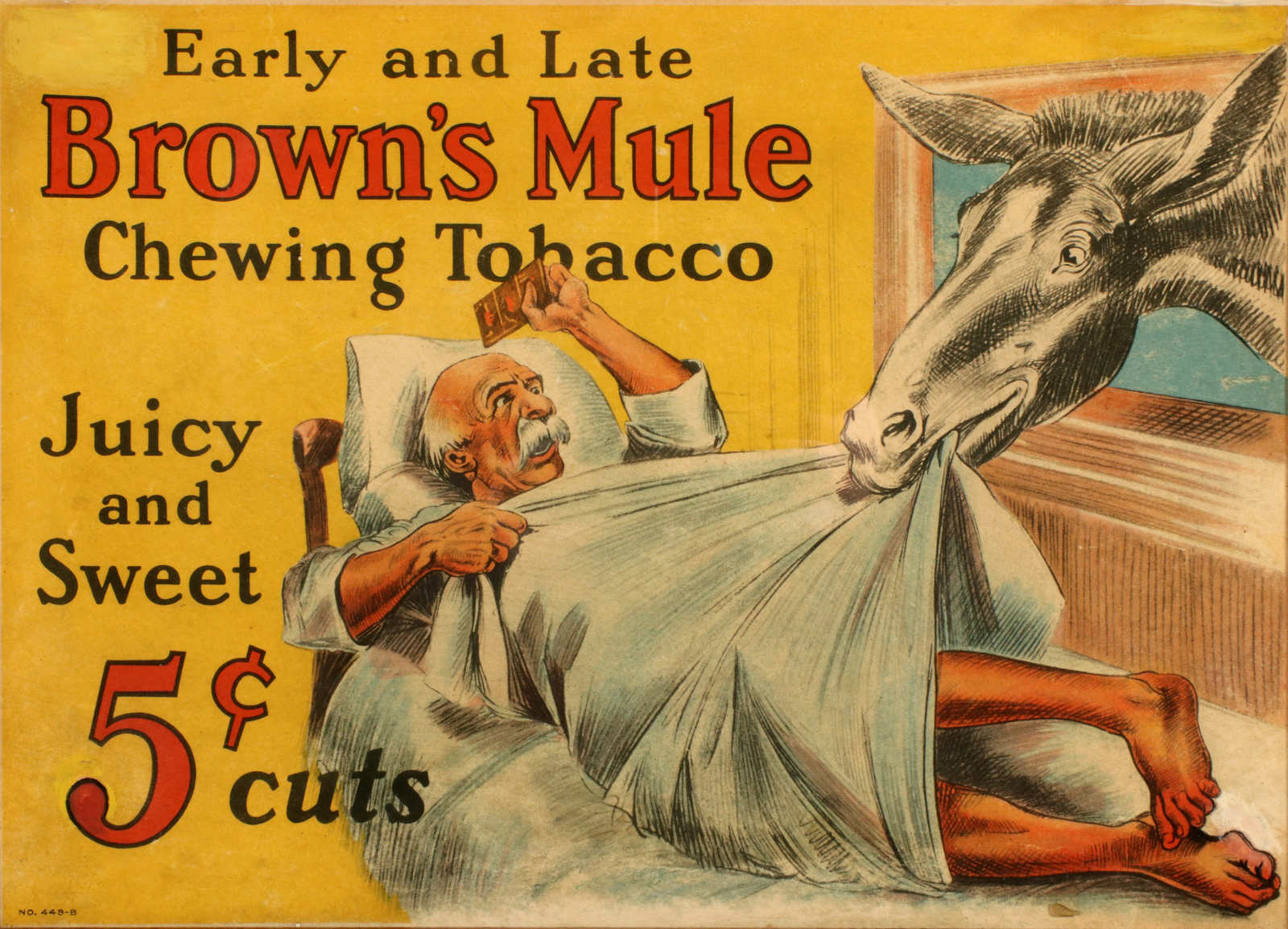
By the 1870s, tobacco products had become cheaper and more available due to more efficient manufacturing technology. Tobacco companies ramped up their advertising campaigns with eye-catching advertising posters, as seen in the following example.
In the late 19th century, cigarette companies began enclosing a colorful trading card in each pack, featuring celebrities and athletes. During this time, magazines became filled with advertisements for various tobacco products.
Twentieth Century Ad Campaigns
As the medical community increasingly acknowledged that tobacco had a negative impact on health, tobacco companies doubled down on their promotional campaigns.
In 1913, R.J. Reynolds launched the most aggressive national cigarette advertising campaign which had yet been seen, when they kicked off a new type of promotional strategy which later came to be called teaser advertising.
Without revealing the brand, they sent a series of provocative ads to newspapers in almost ninety American cities, to be published in succession. The first set of ads merely read, “The Camels are coming.” This was followed by, “Tomorrow there will be more Camels in this town than in Africa and Asia combined.” Finally, the brand was disclosed. Click the following image to see the related picture gallery.
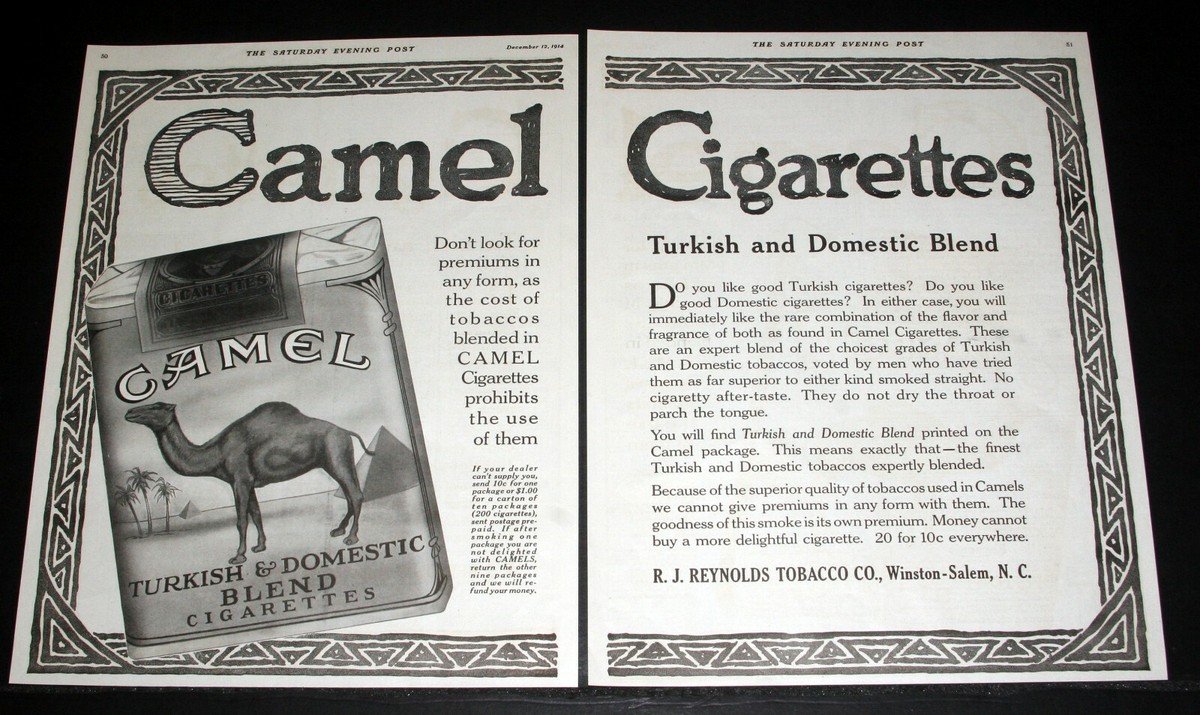
The campaign was incredibly successful. The smoking populace rushed to retailers to try Camel Cigarettes, and they quickly became one of the top selling brands. If this sounds like an overreaction to simple print ads, keep in mind that people in those days weren’t bombarded with entertainment and information from every side like we are now, and anything out of the ordinary caused a sensational response.
From this point, R.J. Reynolds went full speed ahead, saturating newspapers and magazines with ads, along with advertising posters and banners anywhere they could be displayed. They placed heavy emphasis on the mild taste and superior quality of Camel Cigarettes.
By the 1920s, the iconic slogan “I’d Walk a Mile for a Camel”, was created.
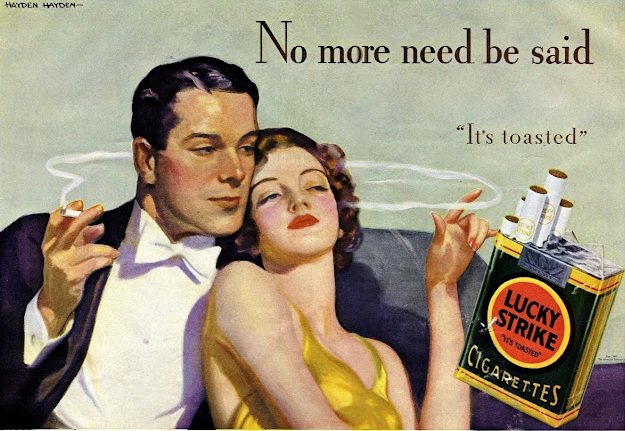
The medical community (finally) began issuing health warnings as early as the 1920s. Tobacco companies responded by making health claims beginning in the 1920s and 1930s. Lucky Strike, for example, claimed that their toasted cigarettes were less harmful to the throat and reduced coughing, and that their products could lead to weight loss.
Another tactic was celebrity endorsements, and glamorous settings in ads. This association between cigarettes and an elegant lifestyle overshadowed health warnings. Young people especially wanted to smoke the same brands that their favorite celebrities used.
For the Soldiers!
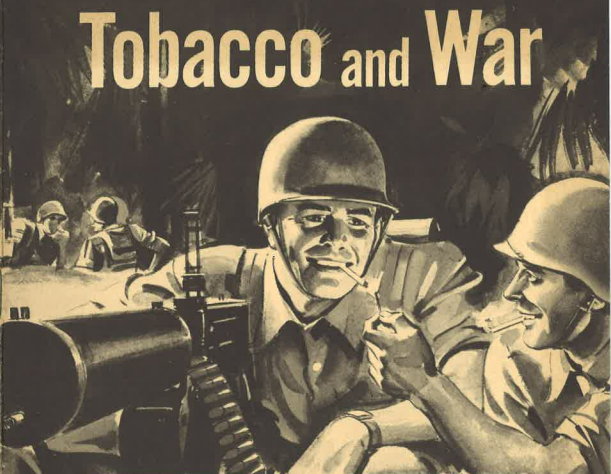
When the United States entered World War II, the entire country became patriotic. Every sacrifice must be made for the sake of the soldiers! Belts must be tightened. Soldiers must be denied nothing!
Tobacco companies played on this public sentiment by guilting them into donating cigarettes to be sent overseas to military personnel, linking the act of smoking to supporting the war effort.
Tobacco ads emphasized smoking as morale-boosting for soldiers, relieving the stress of battle by steadying their nerves. Patriotic ads often featured servicemen smoking in a relaxed setting, accentuating the calm and contentment they experienced when they smoked. Another theme commonly used in ads was to feature soldiers as tough and rugged when they smoked, the bane of the enemy, using taglines such as “They’ve Got What It Takes”.
Tobacco companies and the U.S. government created a partnership to make cigarettes readily available to soldiers. Cigarettes were even included in daily K-rations, and they sold cheaply at PX stations. Tobacco use became deeply embedded into military culture, even beyond the war’s end.
More Doctors Smoke Camels!
Warnings from the medical community grew louder. As a result, tobacco advertising campaigns grew more aggressive. Various brands of cigarettes made claims like “Just What the Doctor Ordered”, and “scientifically proved far less irritating” to the throat. Ads often featured happy families to cultivate a feeling of safety, with one ad showing a child stating she would live to be 100. The aim was clear: erode the public’s trust in the medical community.
Most notably, RJ Reynolds introduced a major new advertising campaign for Camels, which was already among the most popular cigarette brands in the country. Their new slogan, “More doctors smoke Camels than any other cigarette.”, became their signature catchphrase for years to come. But they needed to fabricate some substance to back up that claim.
RJ Reynolds and other tobacco companies found doctors and dentists willing to endorse the use of cigarettes in return for enormous sums of cash – surreptitiously, because physicians risked losing their medical license by accepting bribes. RJ Reynolds went so far as to hire the advertising agency William Esty & Co. (now defunct), to create fake “survey” companies. Doctors were approached at their offices and at medical conventions, given free cartons of Camel cigarettes, and then manipulated into declaring that Camel was their favorite cigarette brand. Advertisements then asserted that, according to “nationwide surveys” doctors “from every branch of medicine” smoked Camels more than any other brand.
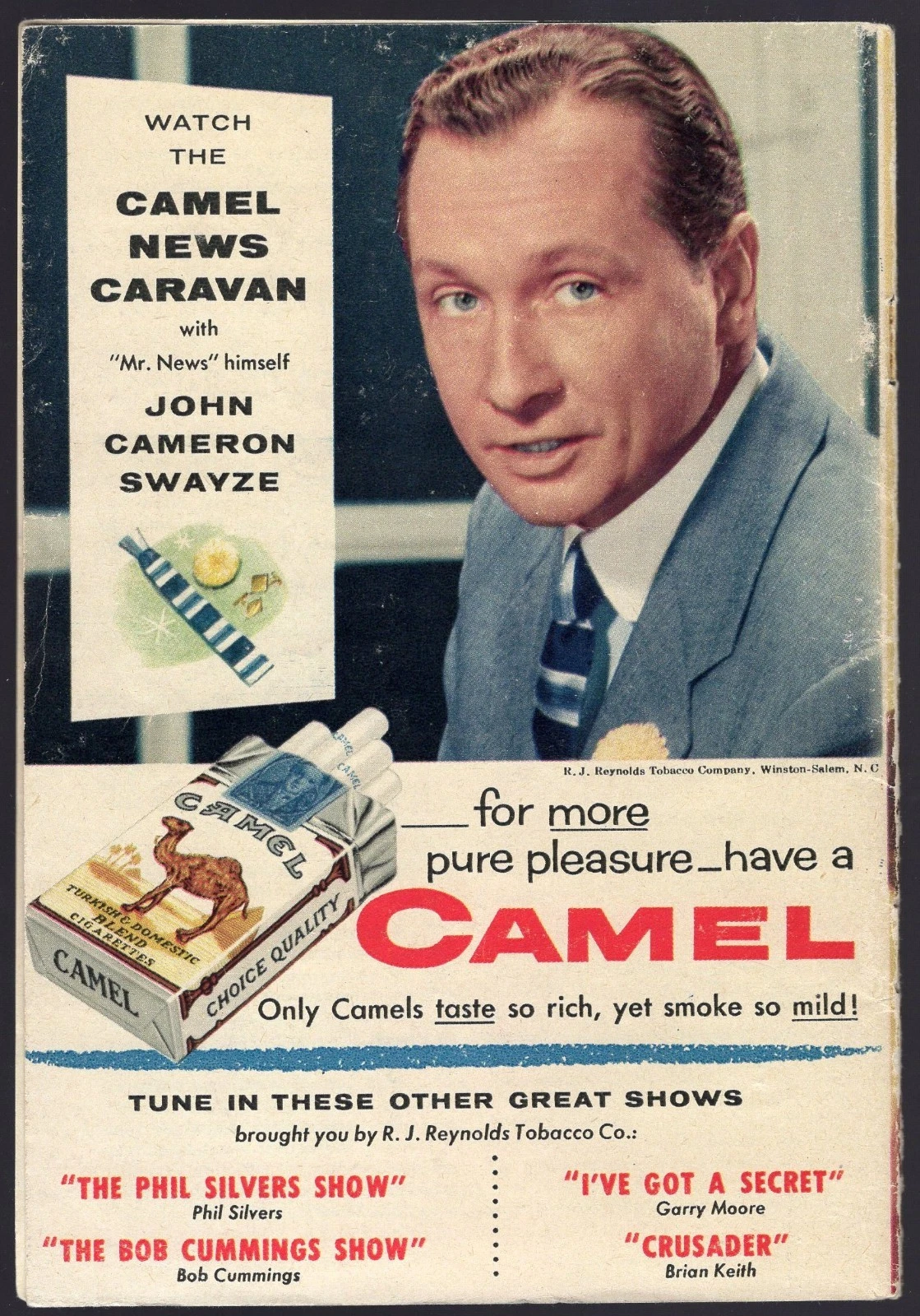
Going beyond print ads, RJ Reynolds introduced the Camel News Caravan to television on February 14, 1949. It was anchored by John Cameron Swayze, marking the first NBC news broadcast which did not depend on movie newsreels. It was, of course, sponsored by the Camel cigarette brand, using doctors, dentists and sports stars as pitchmen. The show eventually evolved into the NBC Nightly News.
All of this failed to drown out the increasing clamor from the medical community, so the highly competitive tobacco companies made an extraordinary move: they decided to collaborate. On December 15, 1953, the CEOs from various tobacco companies met together at the Plaza Hotel in New York City to map out a strategy to subvert the medical communities research findings without looking like the bad guys. They conspired to hire the public relations firm Hill & Knowlton to shape public perception into a new mindset. Their approach: finesse the national enthrallment with science.
The country had only recently emerged from World War II, in which they had been propagandized by all the new technological innovations which had been developed by the military. Now it was the dawn of the nuclear age, the space race with the Soviets was in full swing, and even home life had become “modernized” with wonderful new gadgets and machines. An unprecedented number of University students, including girls, sought degrees in the fields of science and engineering.
The principal founder of Hill & Knowlton, John W. Hill, personally took charge of the tobacco project. He established the Tobacco Industry Research Committee (TIRC), which he housed at the Empire State Building, on the floor below Hill & Knowlton’s offices. To give the TIRC an air of legitimacy, it was staffed by physicians and scientists. However, these were carefully curated from among those who had expressed skepticism about the link between cigarettes and lung cancer.
The Tobacco Industry Research Committee was then publicly announced via a full-page advertisement run in more than 400 newspapers across the country. This ad became known as the “frank statement.” It promised that tobacco companies would aggressively pursue the science of tobacco and ensure the well-being of their consumers.
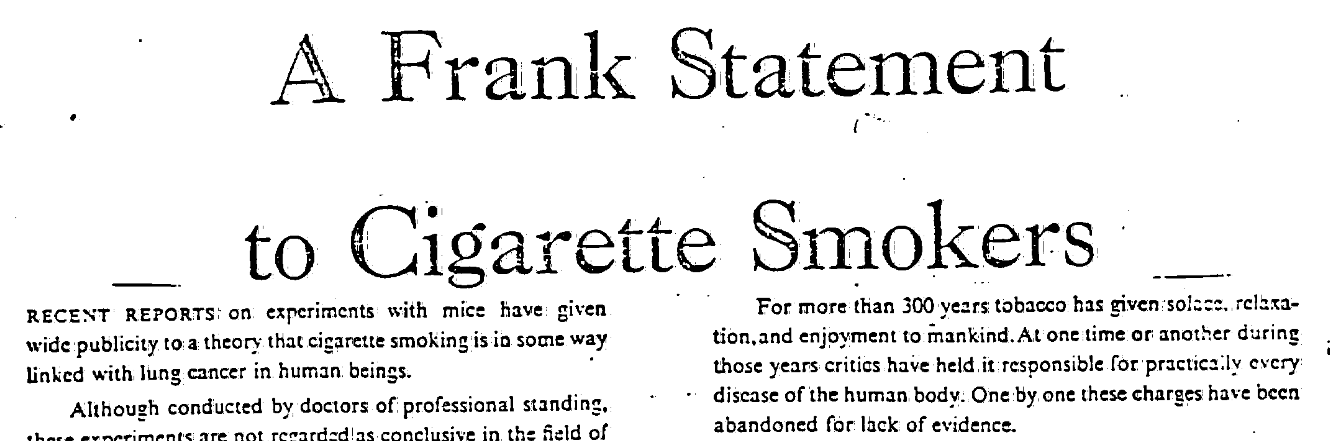
This was a brilliant move. Rather than openly opposing the science, which would have alienated the public, the tobacco industry would (ostensibly) embrace the science. In actuality, they would be sowing the seeds of doubt and uncertainty in the public mind about the genuine medical research which linked the use of cigarettes with cancer. Throughout the 1950s, the TIRC monitored new scientific reports about the dangers of tobacco, and used a subliminal approach to attack them as they were released.
The tobacco industry needed their own scientific advancement to make safer cigarettes. Although filtered cigarettes had been introduced in the 1920s – the filters initially being made from crepe paper – “modern” filtered cigarettes now hit the market. Some of these filters contained asbestos, which was only later found to be dangerous.
In addition to printed “scientific research reports” from the tobacco industry, they also produced a series of promotional films. You can see two of them below.
How Science Serves You: Report From The Southland
This films wows the audience with modern scientific advancements, much of which isn’t even related to tobacco. But it does serve to link tobacco with scientific progress.
Tobaccoland On Parade
This film seeks to entertain the audience, with guest appearances by several celebrities. This was an attempt to link tobacco use with a fun lifestyle.
Big Tobacco Clashes with the Surgeon General
As early as 1961, several medical associations teamed up to urge President Kennedy to create a commission that would investigate the health hazards of smoking. This resulted in the Advisory Committee report on Smoking and Health released by US Surgeon General Luther Terry on January 11, 1964. Thousands of legitimate scientific studies had linked smoking with a variety of medical conditions, including cancer, emphysema, heart disease and more. The medical community could no longer be ignored, and the tobacco industry began a slow, downward spiral.
Tobacco companies now found themselves undergoing public scrutiny, but they weren’t ready to surrender. They poured money into advertising, securing endorsements from celebrities and sports figures. Marketing themes shifted toward cultivating social identities. Ads aimed at women focused on glamour, sophistication and feminism. Ads targeting men emphasized rugged masculinity, the male figures depicted in ads often sporting tattoos.
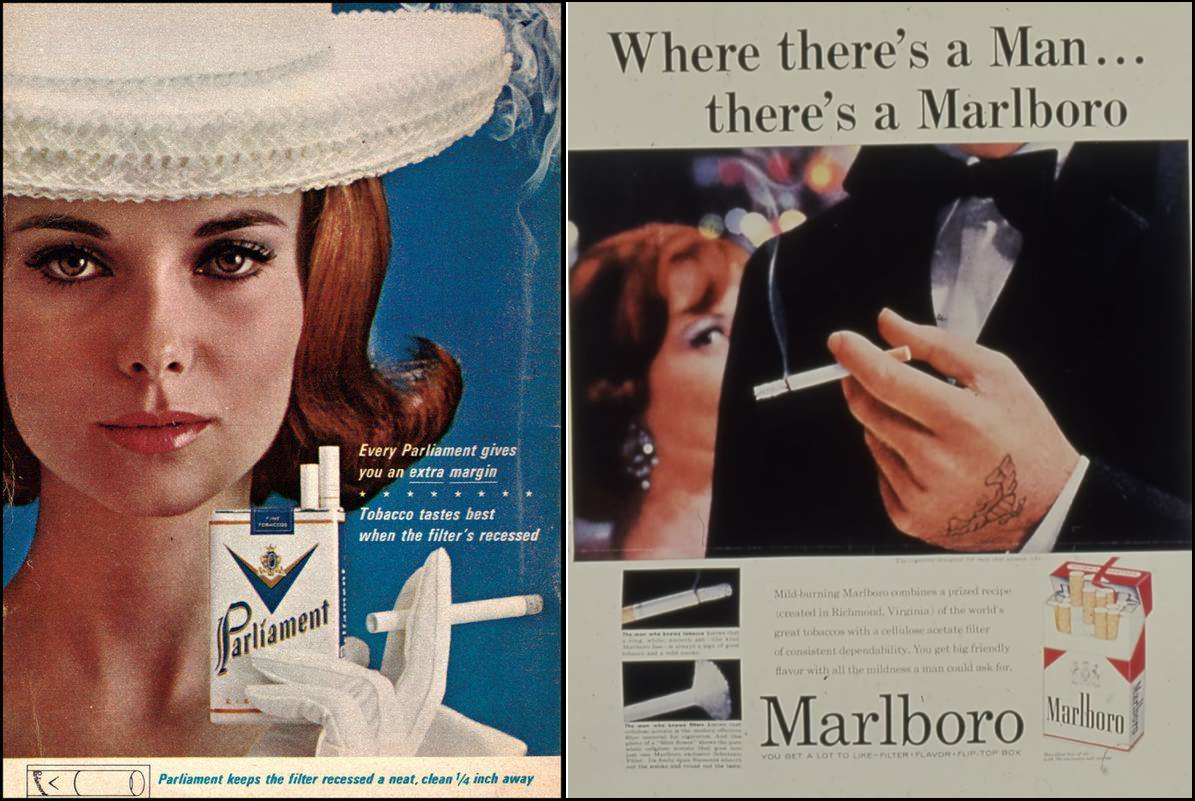
The tobacco companies were fighting a losing battle, though. In 1966, they were ordered to add a label on tobacco packaging stating: “Caution: Cigarette Smoking May be Hazardous to Your Health”. In 1971, television and radio cigarette ads were banned. Print and billboard ads continued unabated, along with sports sponsorships. Merchandise promotions like “Camel Cash” and “Marlboro Miles” were launched. These were coupons attached to cigarette packs, which could be redeemed for branded merchandise.
Restrictions on tobacco continued to tighten.
In 1985, the American Medical Association unsuccessfully lobbied for a ban on all cigarette advertising.
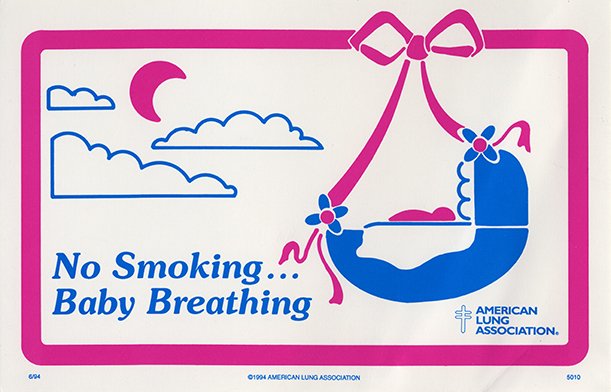
Although anti-smoking campaigns had been implemented by various non-profit organizations for decades, these crusades became more aggressive, led by The Centers for Disease Control and Prevention, the American Heart Association, and many other entities.
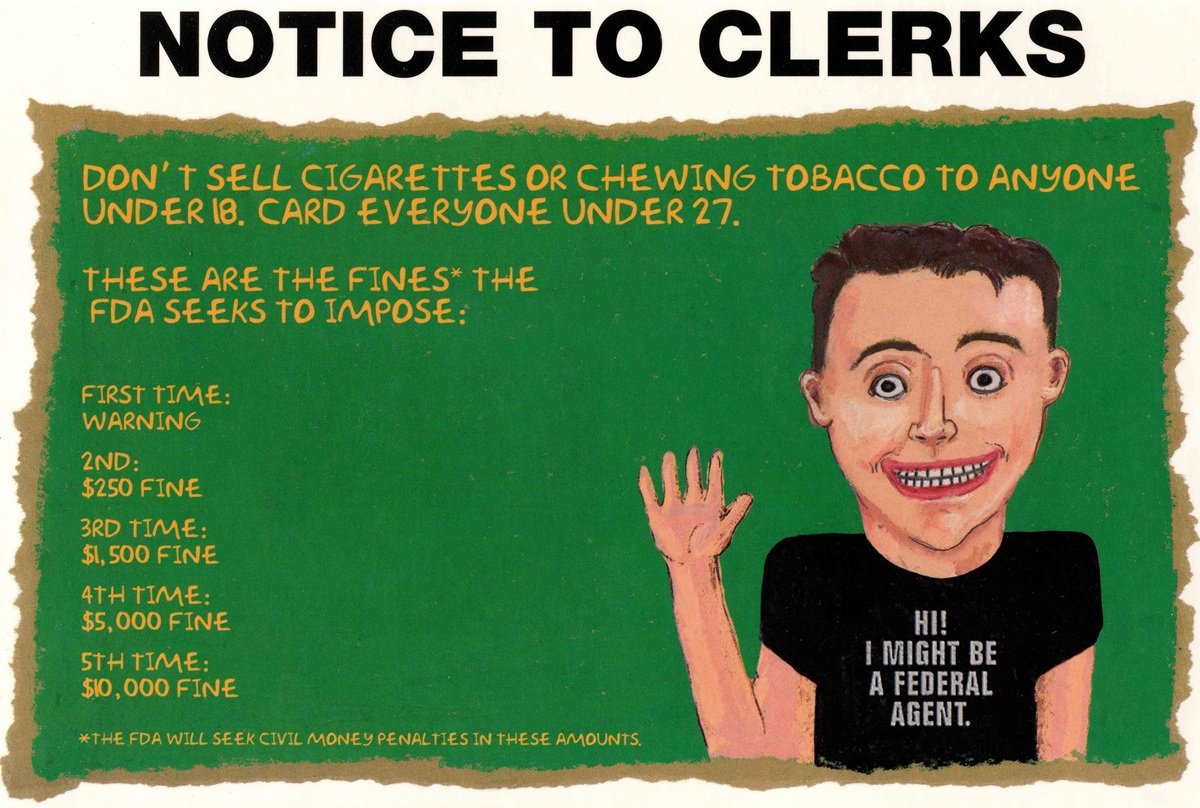
In 1996, the Clinton administration gave the Food and Drug Administration jurisdiction to regulate tobacco as a drug. The FDA used this new power to limit cigarette advertisements aimed at minors, set the minimum purchase age to 18, and restricted outdoor ads.
The Family Smoking Prevention and Tobacco Control Act was signed into law by President Barack Obama on June 22, 2009. This law imposed new warnings and labels on tobacco packaging and their ads, aiming to discouraging minors and young adults from smoking. It also banned flavored cigarettes and required tobacco companies to seek FDA approval for new tobacco products.
On December 20, 2019, a new law known as Tobacco 21 was signed into being. This law raised the federal minimum age for sale of tobacco products to 21 years.
Current State of the Tobacco Industry
More than 40 percent of U.S. adults smoked cigarettes in the mid-1960s. That rate has dropped to about 10%. However, about 19% of adults use tobacco products in general, including cigarettes, e-cigarettes, and cigars. Smoking rates are highest among adults aged 45–64 (15%) and lowest among young adults aged 18–24 (5%). 24% of men use tobacco, compared to 14% of women. 7% of U.S. adults reported using e-cigarettes in 2024, and in the same year, 2% of high school students reported smoking cigarettes in the past 30 days. A complete set of stats for 2024 can be seen HERE.
The number of U.S. tobacco farms has crashed to about 3,000 in 2022, down from a peak of about 512,000 in the mid 1950s.
The tobacco industry is still spending billions annually on advertising, but much of the focus is on retail price discounts. Younger consumers are targeted with non-combustible tobacco products, such as nicotine pouches and e-cigarettes, via digital, social media, and influencer-led campaigns, using “reduced-risk” imagery.
According to the Campaign for Tobacco-Free Kids, “nearly half of teenagers visit a convenience store at least once a week; and research shows that the more cigarette marketing teens are exposed to in retailer stores the more likely they are to smoke”. Tobacco companies are aware of this and saturate convenience stores located close to schools with tobacco ads designed to appeal to youngsters.
For decades, anti-tobacco campaigns had achieved slow, but steady success in reducing tobacco use by the public. Then in spring of 2025, DOGE eliminated the anti-tobacco campaigns at the Department of Health and Human Services, the Food and Drug Administration, and the Center for Disease Control and Prevention’s Office on Smoking and Health, prompting a letter of protest from the Senate to Secretary Kennedy, Acting Director Monarez and Commissioner Makary. State programs also cut their own campaigns due to the loss of federal funding.
The State of Tobacco Control 2026 report by the American Lung Association asserts that the federal government and the states need to reimplement these programs, particularly the campaigns targeting children.
You can do your part by contacting your representatives and urging them to fund these campaigns. If everyone would do that, it would make a difference.

I found enough information about this subject to write a book! But I had to condense it down to blog post length. You can go to This Page for some additional links.
.



12 Comments
jerry godinho
This post is showing one of the most famous vintage tobacco advertisements from the mid-20th century—“More Doctors Smoke Camels than any other cigarette.”
The core idea behind it was simple but misleading: cigarette companies tried to borrow medical authority to make smoking seem safe or even “approved.” In this Camel campaign, actors dressed as doctors were used to imply that physicians preferred the brand, creating a sense of trust around smoking despite growing health concerns at the time .
In reality, it wasn’t based on genuine medical endorsement or sound science. It was marketing psychology at work—if a doctor “seems” to choose it, the public is more likely to believe it’s harmless or superior, even when the claim was heavily manipulated or selectively framed .
So this kind of ad is less about medicine and more about persuasion dressed in a white coat.
Jordyn Jordan
This was an interesting breakdown of how tobacco has evolved. This was something that that started as ceremonial then turned into mass production and later became a global addiction. It’s wild how much war shaped marketing, our cultural trends, and what became normal in our society.
Beth
It is so crazy to me that an entire generation of people were duped into thinking cigarettes are healthy. It’s such a vile business to be in.
Kim C
I learned so much from this blog. I had no ideal cigarettes were hand-rolled at first. I’m from Europe and in Europe it seems like many more people smoke compared to the US. That age 21 to purchase cigarettes made me think of when I was a little girl and I would go to the store and buy cigarettes for my dad. All it took was a handwritten note. I don’t think that would fly in the US.
Rosey
This is wild!! That first one really gets me… doctors?!? It only goes to show that adversiting can be so very powerful. If the doctor does it, of course you can too, right? Sheesh!
Herose Nicole
This is my most detailed knowledge about the history of tobacco. Thanks for sharing this, I gained a lot of knowledge just reading this.
Alejandra
This is shocking! It’s not been so long since doctors promoted smoking cigarettes. Oh my. Such an interesting and informative article.
Lisa R Charleston
Wow, what a read. It’s wild to think doctors once smoked Camels, even knowing the harm cigarettes can do to the body. Advertising is incredibly powerful, and we still see that influence today.
Melanie E
It’s crazy how much missinformation can be banded about when money can be made by big companies and large bribes are available. To think something that initially started off as medicinal to be used in small doses became a fashion statement and was marketed so much even though risks were clearly there and serious.
Andreia Mulligan
Big tobacco has a past peppered with controversy. It’s just insane that our doctors, those under Hippocratic oath, would just ignore the obvious dangerous signs to our health and still pushing tobacco products.
Stephanie
This just goes to show that research and more information can definitely be a good thing. I didn’t realize nicotine went that far back in history!
Bedabrata Chakraborty
Seeing how smoking was once promoted as healthy shows how public understanding and messaging have changed over time. Thank God we know better now.